
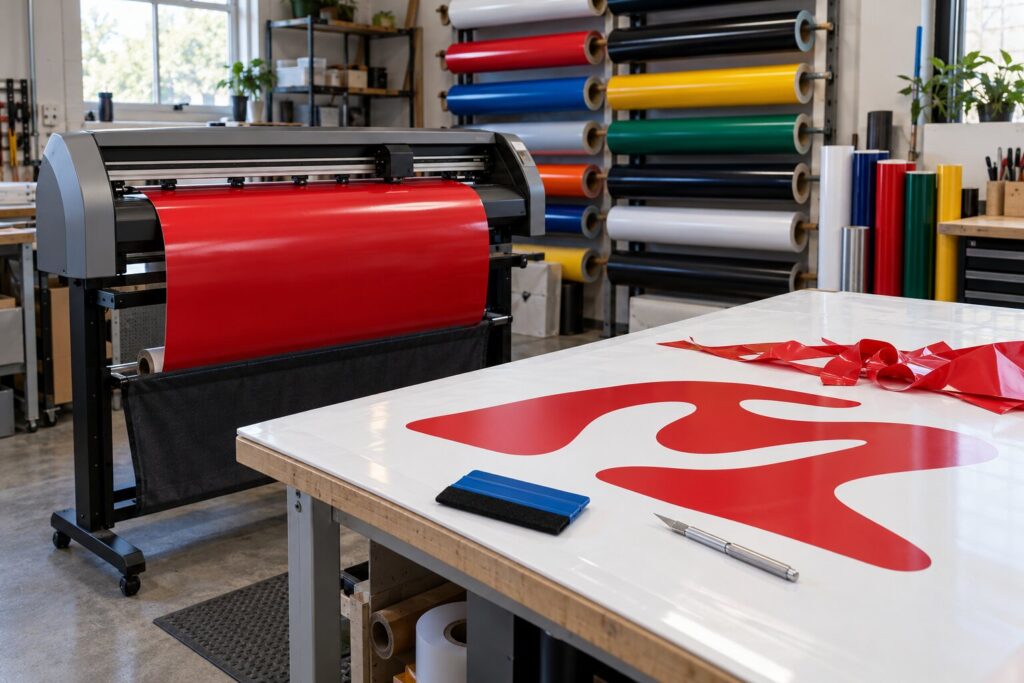
Starting a sign business can begin with a computer, design software and a vinyl cutter in a spare room, and grow into a workshop with wide format printers, routers and an install team. The hard part is knowing what to buy first and what can wait. This guide explains how to start a sign business step by step, with an equipment checklist for each stage, the consumables you will need, the business and licensing basics in the US, and how to find your first customers. It is general guidance; licensing and permit rules vary by state, county and city.
Decide what kind of signage business you are starting
The word sign business covers very different operations, and the equipment you need follows from the work you want to win:
- Cut vinyl lettering and decals for vehicles, windows and small signs
- Printed graphics such as banners, posters, wall and window graphics and vehicle wraps
- Rigid signs: printed or lettered panels for shop fronts, site signs and wayfinding
- Fabricated, illuminated and outdoor signage, which needs metalwork, routing, electrical skills and more space
- Installation only, working for other sign companies
Many new sign shops start with cut vinyl and printed graphics, then add rigid and fabricated work as they grow. Others buy in print from trade printers at first and keep their own equipment to design, cutting and installation. Both are sensible ways to limit what you spend before you have steady work.
Sign business equipment checklist
| Stage | Equipment | What it does |
|---|---|---|
| Day one | Computer and design software | Designing signs and preparing files for cutting and print |
| Day one | Vinyl cutter | Cuts lettering, logos and decals from colored vinyl |
| Day one | Application table and hand tools | Weeding, masking and applying vinyl: squeegees, knives, tape, heat gun |
| Growing | Wide format printer and RIP software | Printing banners, posters, wraps and graphics in full color |
| Growing | Laminator | Protecting prints and mounting them onto boards |
| Established | CNC router or laser cutter | Cutting rigid boards, acrylic and letters |
| Established | Flatbed or hybrid printer | Printing directly onto rigid boards |
| Throughout | Sign shop software | Quotes, job tracking, invoicing and scheduling |
Vinyl cutters
A vinyl cutter, sometimes called a plotter, drives a small blade across a roll of self-adhesive vinyl to cut letters and shapes. Roland DG says its vinyl cutters are used by sign and graphics professionals to create signs, vehicle decals, stickers and heat transfer apparel, and its desktop VersaSTUDIO GS2-24 cuts graphics up to 24 inches wide. Wider floor-standing cutters handle bigger lettering for vehicles and shop windows.
Wide format printers
A wide format printer lets you sell full-color graphics rather than single-color cut lettering. HP defines large format printing as printing on media more than 24 inches wide. Many sign shops choose a print-and-cut machine that prints and then contour cuts stickers and decals. Roland DG’s eco-solvent range runs from 20 and 30 inch desktop printer/cutters to the 64 inch TrueVis XG-640, which it describes as ideal for signs, banners, vehicle wraps, backlit displays, window and floor graphics and wallcoverings. Our guide to large format printing compares the ink types, such as eco-solvent, latex and UV, and what each is good for.
Laminators and finishing
Laminating protects printed graphics from scratches and weather and is often needed for vehicle and floor graphics. A laminator can also mount prints onto rigid boards. Banners need hemming and eyelets, and many jobs need cutting to size.
Routers, lasers and flatbed printers
These come later, once you have regular rigid and fabricated work. A CNC router cuts aluminum composite, acrylic and foam board into panels, shapes and letters; a laser cutter is often used for acrylic and fine detail. A flatbed or hybrid printer prints directly onto rigid boards: HP’s Latex R530, for example, handles boards and rolls up to 64 inches wide and media up to 2 inches thick. They need floor space, power and extraction, so check your premises before buying.
Signage materials and supplies
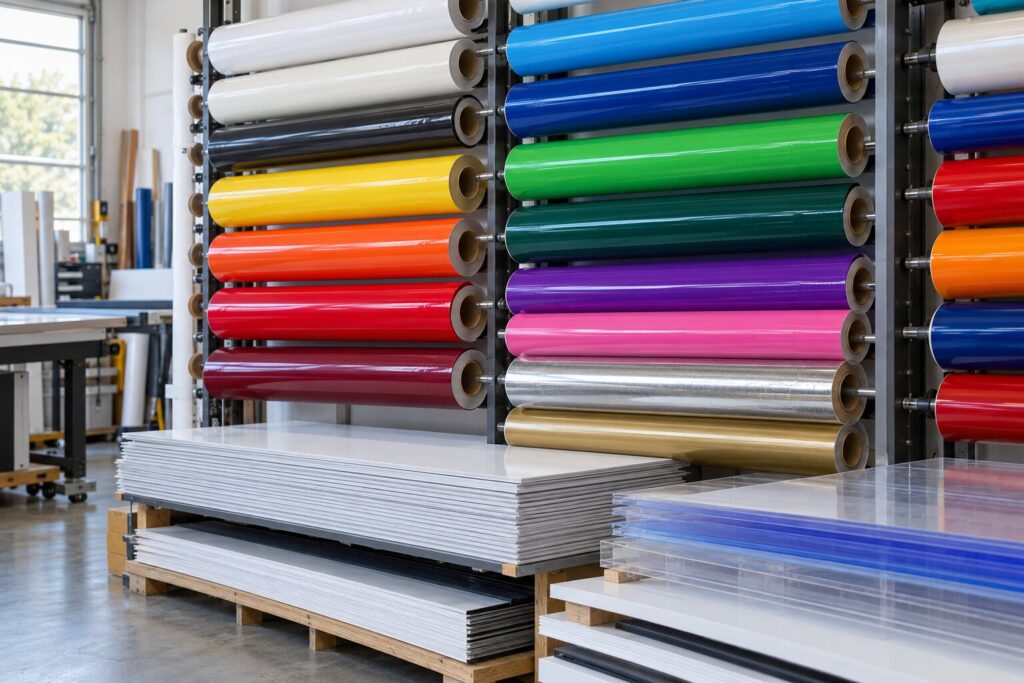
Equipment is only part of the cost. You will need a stock of sign vinyl in the colors you use most, application tape, printable media such as banner material and wrap film, and rigid substrates such as aluminum composite, PVC foam board and acrylic. Our guide to rigid sign materials explains the common boards. Find sign supply distributors near you and open trade accounts early, because many offer next-day delivery that saves you holding much stock.
Business basics for starting a sign business in the US
The U.S. Small Business Administration (SBA) sets out the steps for launching any business: pick your location, choose a business structure and a name, register the business, get federal and state tax ID numbers, apply for licenses and permits, open a business bank account and get business insurance.
- Location and zoning. The SBA says your business location determines the taxes, zoning laws and regulations that apply, and that zoning can still apply to home-based businesses. Check with your city planning department before setting up a workshop, especially if you plan to use routers, lasers or solvent inks.
- Licenses and permits. The SBA notes that most small businesses need a combination of licenses and permits, that requirements and fees depend on your activities and location, and that construction is among the activities commonly regulated locally. Check your Secretary of State’s website and your city’s rules. Illuminated signs involve electrical work, and many cities require a permit before a new sign goes up, so read our guide to sign permits.
- Insurance. The SBA says the federal government requires every business with employees to carry workers’ compensation, unemployment and disability insurance, and that some states require more. Sign installers working at height or on customers’ premises should talk to a broker about liability cover.
Marketing your sign shop and finding customers
Most sign businesses start local. Store owners, trades with vans, offices, schools and event organizers all buy signage, and you’ll find many of them need help with their brand as much as the sign itself. A clean vehicle wrap on your own van and good signs on your own premises are your best marketing, because every customer can see your work. It also helps to work with other sign companies: many established shops buy in installation, cutting or overflow print. Trade associations are worth joining too: the International Sign Association (ISA) in the US runs ISA Sign Expo, which it describes as the place where the sign, graphics and visual communications industry gathers. Visiting a trade show is a fast way to compare equipment before you buy. Our guide to sign and print trade shows in 2027 lists the main dates.
Where to buy sign making equipment
Buy from a dealer who will install the equipment, train you and service it, and ask what running costs (ink, blades, parts, maintenance) look like over a year as well as the machine price. Our directory lists sign making equipment suppliers, including wide format printer and vinyl cutter dealers, sign software vendors and sign supply distributors, with where each one operates.
Sources
- U.S. Small Business Administration, 10 steps to start your business and Launch your business: apply for licenses and permits.
- Roland DGA, Vinyl cutters and Eco-solvent printers and printer/cutters.
- HP, The Large Format Printing Process and HP Latex printers.
- International Sign Association, ISA Sign Expo.